
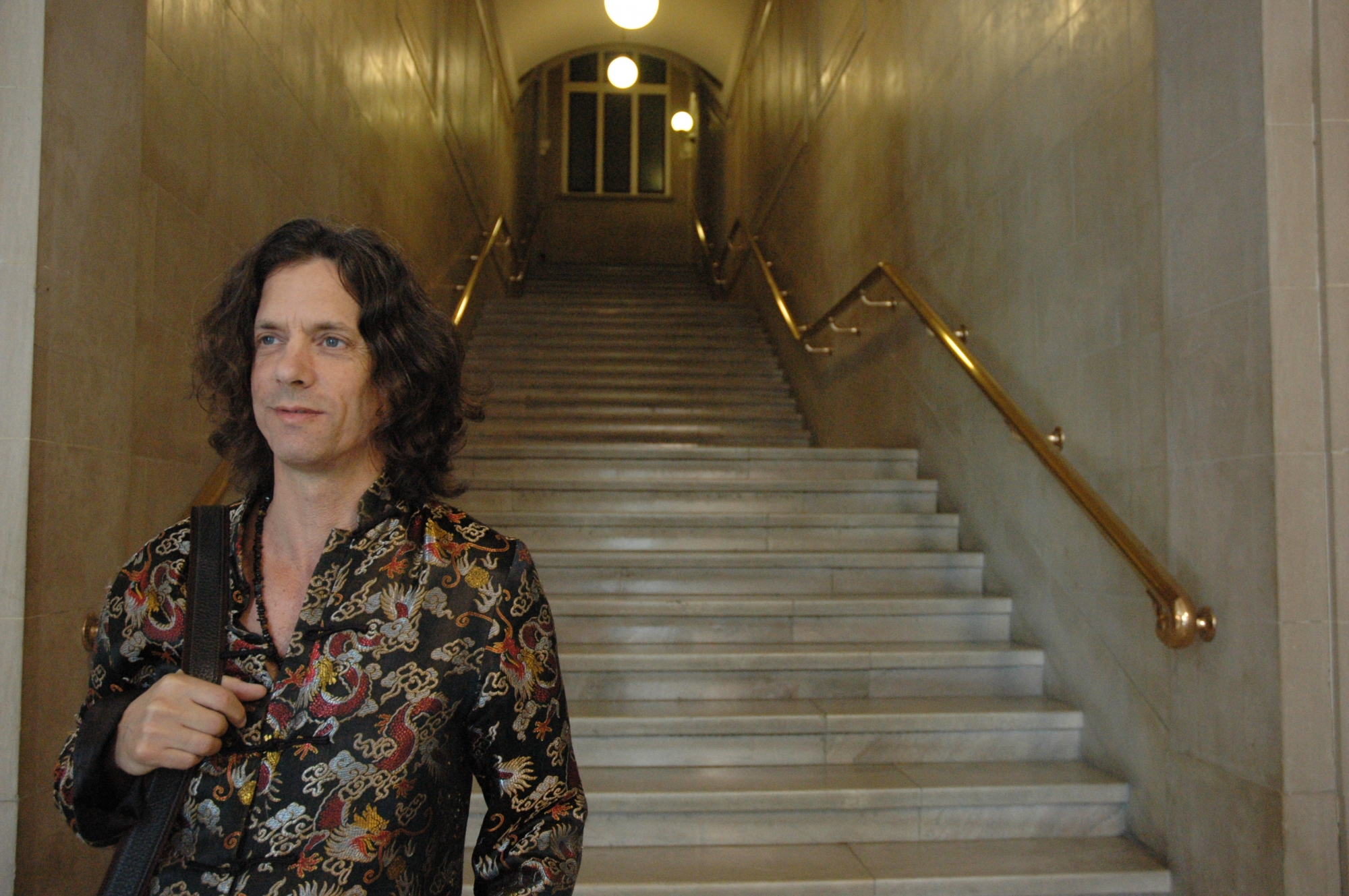
Mark Pinkus is a classical pianist from Montreal, Quebec. CBC called his music "Beautiful little stories without words". He has sold over 200,000 albums to this date, and is in preperations of releasing his next. His c.d Free Spirit hit top 30 on the U.S radio charts, and these are just a few of this amazing pianists accomplishments. We had the opportunity to talk to Mark about his music, his startings, his inspirations, the proccess of getting his music to the level it's at and much more. If your looking for an inspirational read, check it out.
You started writing music at a young age. It’s quite hard to find teachers who encourage original compositions as opposed to “the classics,” but you did manage to find a teacher who encouraged you to perform your compositions for the world. How valuable was it having someone behind your music?
My piano teacher's name was Anne Eggleston. She lived down the street
from our house in Ottawa. Anne was a composer and performer of original
classical music. At her house she had two grand pianos and a harpsichord.
She was delighted to hear me play for her my piano compositions. I started
composing the very moment I sat down at the piano at the age of 7. I was
supposed to be practicing the pieces Anne suggested but I wasn't very
interested in playing other composer's music. Very often I wouldt tell
her at my lessons that I didn't practice what I was supposed to but that I
had a new composition ready to share with her. My creative energy and
spirit for writing music was far more important than anything else. I
didn't have the concentration or the patience as a young boy to focus on
other written material or technique. Anne loved to organize house concerts
where her students would perform for family and friends. I have a copy of
the program Anne made up for the concert which dates back to the early
1970's. On the program her students performed Bach, Brahms, Scriabin,
Beethoven, Haydn,and Ravel etc. and Pinkus played Pinkus. When Anne
passed
away the large tree in front of her house paid tribute to her life.
The
tree was filled with singing birds and every time I passed by
the tree I
thought of Anne. That was how Anne's musical soul sang for the
world. I
was truly very lucky to be taught by Anne and to have a teacher
that
supported self-expression.
Your
music has no words, but does a great job of conjuring up images
into the mind of the listener. What do you draw inspiration from
when writing your songs?
A broadcaster here in Canada named Clyde Gilmour called my music
"Beautiful little stories without words." My inspirations come from all
over the place. Mostly when I have an emotion that's moving inside me, I
go to the piano and express those feelings. I am an extremely visual person
as well. My mother is a watercolour painter and the outside world with all
its shapes, forms, and colours inspire me on many levels. Nature is one of
my biggest teachers. So many compositions are inspired by the infinite
dance of nature. Relationships, travel and the unexpected bring out a lot
of creations as well. My favourite moment is when the inspiration is
channeled immediately into the creative process. Inspiration gives me the
wings to fly.
There are a lot of classical pianists out there, but few take it far as you have. What do you think it is that stops a lot of pianists from creating their own compositions and performing and releasing them?
I have always said that there are two directions about deciding what to
do with your original music. YOu can play it only for yourself(of for a
few friends) and then put it back into a drawer, close it and hide it or
you can decide to put out a recording and share it with the world. It is
important to respect either way. Nothing about self-expression is to be
forced. When you create your own music and share it on a big scale, there
will be at times some criticism. This goes for everyone. It has been like
that since the very beginning of the commercial art experience. Some
composers are afraid to share their inner world and don't feel that their
music is good enough. My motto here is: Put it out anyway! You have
nothing to lose. There will ALWAYS be someone that will be very touched by
your music. It all comes down to the composer's personal decision. The
other reason whay a lot of composers don't "go all the way" by releasing a
recording is simply because it takes tons of perserverance, patience,
organization, energy and money and if you don't visualize the final
product and follow through step by step it's not going to happen. Dreams
take hard work to realize. I released my first recording Starting to
Believe, even when I didn't believe in myself. I did it anyway.
You’ve played shows to sold out crowds at places like
Montreal’s Place des Arts, do you remember the feeling of your
first sold out show? Do you still get the same feeling when you
sell out a venue?
I don't like to see one empty seat. I usually sell all the
tickets
myself one by one will in advance of the concert. As a result all
my shows
sell out. This is a business and I"m very driven to sell out
concerts. It
is not easy sometimes selling out larger venues alone but I do it.
When I
performed for the first time in front of a sold out audience at La
Place
Des Arts here in MOntreal, I was nervous backstage but very
prepared.
Before I walk on stage I say to myself,"I'm a fish swimming in the
deep
vast ocean
and so is everyone else in the audience."
That calms me down and I tell myself whatever happens,
happens.
I'm excited to perform for the audience and I actually like the
fact that
I can barely see the audience in front of me. The lights shining on
stage
block out the faces of the audience. I know there are people there
but not
seeing them helps me feel like I'm in some invisible space. I still
get
nervous before a sold out show. The nervousness varies. I do my
best to
create an immediate intimacy with the audience and in that way I
feel like
we're one big family sharing all together the experience of the
musical
ride.
Your cd, Free Spirit, hit number 30 on the USA radio top 50
chart, which is a huge accomplishment. How was it finding out your
album was such a success?
When my cd Free Spirit came out in 1997 I put my promotional
hat
on(like I do for all of my cds) and turned my apartment into
a
distribution warehouse. First I contacted either by phone or by
email
every radio station across the USA that played on air
new
age/semi-classical solo piano music. Then almost every day for
about 2
years I would package and send out the cd to the radio stations and
then
follow up soon thereafter to find out when it would be broadcast.
My life
was mostly walking back and forth to the post office. I was
extremely
happy to see the cd hit #30 on the charts after all that hard
work
promoting the cd. No one else was going to do it. So I learnt
simply by
doing it and I got extremely good at it. The radio, satellite and
internet
producers in the USA have been very supportive and open to playing
my
music on their stations. The cd Free Spirit was distributed by
Avalon
Music worldwide and by Universal Music Canada in Canada. All
together the
cd and cassette sold about 50,000 copies. If you really work hard
and be
consistant very good things can happen.
Global Television’s syndicated TV series entitled “Men of Music” did a 30 minute special on your life? How was that process?
The Tv special was a whole new experience for me. This time I was the
one being interviewed. I was a radio announcer and host of a trilingual
radio show for the Italian radio network in Paris, France. I got to
interview people all the time on my show. So now the roles were reversed.
Some of the producers, sound engineers and friends I worked with on
various projects were also interviewed and having their perspective and
comments added to the tv show made the experience even more enriching. I
remember being asked the question: "What inspires you to write music?" And
I replied,"By not playing music." Also my friend and producer Gideon Cohen
commented saying "Mark is a madman, and I feel he still has a lot of
madness to express." Those weren't the exact words but I liked that
comment by Gideon. We all have a box of craziness to bring out and express
it through our music. I'll never forget however the comments made by the
the great classical pianist Arthur Rubenstein who is my favourite
classical pianist.
He said in one of his books on his life: "There is more to life than
playing music." I couldn't of said it any better.
You’ve recently completed a book, composed to teach beginners, can you tell us a little bit about your book?
I walked into a huge music store here in Montreal and wanted to find a
very simple introduction book on how to learn to play the piano. I asked
the salesman to show me what they had available. I looked at all the
beginner's books and actually found them to be to complicated. I decided
to write a book that would be a much more preparatory approach to assist
beginners in learning to play. The concept of the book was to fill the
pages with games I invented with the goal to have lots of fun as well as to
learn about the world of music aside from actually playing. Since I
teach as well,
I would try out the games I invented on my youngest students. We had a
blast. They were so happy to play and learn. Their progress was
unbelievable. Each page of the book was like jumping into the unlimited
universe of the musical language. No scales or technical exercises to
learn..just games to play! The book is like a cookbook. Every page had a
different game to try out and explore. I wanted to call the book "Music
lessons for boring piano teachers." Way too many teachers are too
technique conscious and the student's spirit and inner creativity and
expression is smothered and kept within. It's all about having fun
especially at the beginning stages to install in the student's heart the
joy of music. To see playing an instrument as a close friend. All my
young students, even at the age of 4 and up learn to compose and
perform
and with total joy. One of my students Leo Leclerc at age 9 came
out
with his first original solo piano cd. Teaching Leo was such
an
inspiration for the book. Once you show the child or adult the
universe
within of self-expression and explore that journey, anything can
happen.
I feel that teachers don't bring out enough of that creative spirit
and
imagination that is so waiting to be shared and brought out. That's
the
magic fo being human and of the human spirit.
Your music gets rotations on XM/SIRIUS, MUSIC CHOICE, DMX, and on CBC GALAXIE, this is a medium that a lot of artists don’t get the opportunity to be placed on, can you tell us a little bit about that process?
The process is very simple indeed. Once you have a recording finished
all you have to do is contact those stations via email and let them
know
you'd like to send tham a copy of your music for the producer's
to
listen to. It's good to know what program your music would fit in
in
advance. They like to know you've done your side of the research.
And
then follow up by contacting them to see if they received it and
when
will they put your music in rotation. Of course they have to like
your
music and feel it is professional enough to broadcast. All of
the
stations can be contacted via their websites. All it takes is some
basic
promotional skills and the desire to contact them and see what
happens.
The advantage of being on their program at first opens the door
to
contact them again when your next release is available. The chances
are
excellent that they will play your new release as well being
already
familiar with your music. Stations are
usually very interested in receiving new material. Stay positive
and
send your music to the proper person in charge of the
specific
program that suits your style of music and the rest is full of
surprises.
You’ve had a lot success in our beautiful country, but you’ve
also gotten a lot of recognition overseas, how did you tackle that
task?
My other motto is: "Don't think local, think global." It drives me
crazy
seeing bands and solo artists spinning around and around for years
playing
in the same city and trying to make it all happen for their
careers
locally. The world is your stage! The local scene is a microscopic
pebble
of sand on the beach. I contact as many producers as I can around
the
world. I've
been doing this since 1990 when my cassette Starting to Believe
came out.
I began by going around with a small cassette briefcase and
visiting
stores in the neighborhood and selling my cassettes at $5. I was
a
travelling cassette salesman. Then when the cd format came out, I
began
with the internet to research everywhere in the world and stations
I could
get my music on. My father once said to me," Keep throwing the mud
against
the wall and eventually it will stick." Here's the formula I
use:
Research, contact, deliver the merchandise, follow-up, and finally
thank
the person for playing your music. Nobody wants it to be
complicated and
the music industry is so challenging to begin with that the simpler
the
commuciation the
better for everyone. Always be kind, to the point and efficient
when it
comes to contacting the producer of the program. I am still
following the
same procedure and with my next cd coming out this fall, I"ll be
back at
it again.
What advice do you have for up and coming pianists looking to
follow in the same path and releasing their own music?
The vast majority of people in the entertainment industry talk a
lot
about what
they want to achieve and yet I am amazed of how so few actually
do
what they set out to do. It is so easy to talk about a music
project for
example but to do it is another thing all together. I don't usually
give
out advice unless I'm asked to, but here's my final comment: Talk
less and
get on with the project! The wasted energy you spend talking about
it
could be implemented into doing it. If you really want to share you
art
with others, you're going to have to dive right in and get on with
it. And
lastly, no matter who criticizes you or who shows indifference to
you and
if others don't think you're capable, or don't believe in you,
well, move
on anyway with your dream. Obstacles are a part of all of our
lives. It's
ok to walk through a storm and there will be many storms along the
way
when you share your music to the world but just remember, no matter
what
others say or do to stop you from fulfilling your dream, keep in
your mind
and spirit that a rainbow is shining above your head after the
storm. And
that illuminosity and colour in the sky is thanking you for going
your own
way.
To find out more about Mark Pinkus and his music visit http://www.markpinkus.com/mp/
Interview By: Jesse Read
jesseread@dropoutentertainment.ca
